


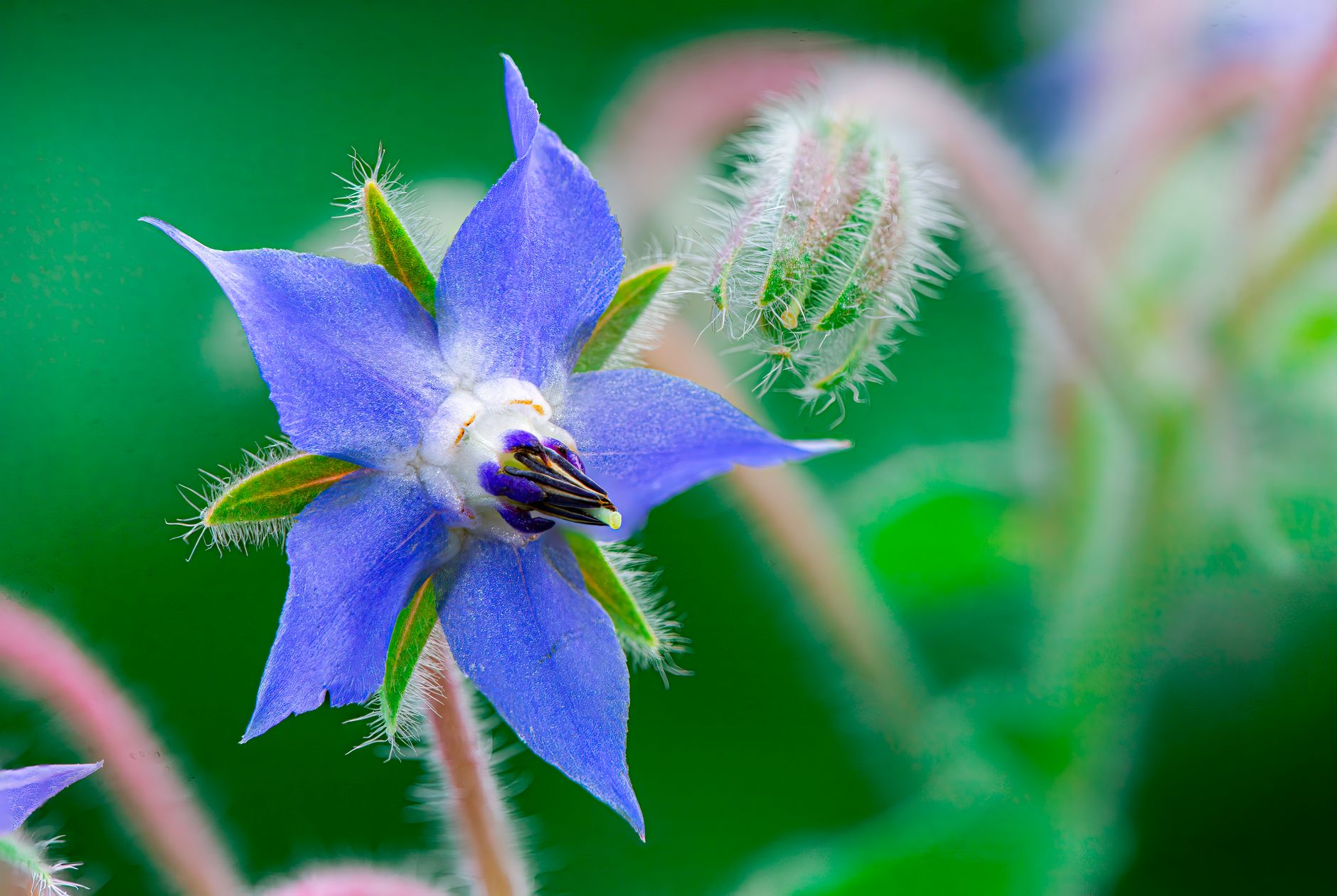
Borage oil: the richest GLA source among care oils
Pressed from the seeds of the starflower herb, known for its high content of gamma-linolenic acid. We sort it out honestly.
How to use itLots of GLA, sensitive to air
Borage oil (Borago officinalis) is pressed from borage seeds and holds the highest share of gamma-linolenic acid (GLA), an omega-6 fatty acid, of any common plant oil. That is exactly why it is popular in skin care.
It is sensitive to light and air, so it turns rancid quickly and belongs in a cool, dark spot.
How it is used
- Skin care: as an additive in creams and serums, or neat and sparingly, for dry and mature skin.
- As a capsule: also sold as a supplement, where the rule is to talk to a professional if you have complaints.
- Store cool: buy small, keep cool and dark, use up promptly.
- Do not heat: it is a care and supplement oil, not a cooking oil for the pan.
Said honestly
Borage oil is marketed heavily for dry and irritated skin, and the evidence behind many of those claims is mixed. It is a high-quality, GLA-rich care oil, and that is all we claim, with no healing promises. It oxidizes easily, so freshness matters. For skin conditions, or before taking it as a supplement, the decision belongs in professional hands. We give you the facts, the choice stays with you.
Sources and further reading
- Borage , Wikipedia